

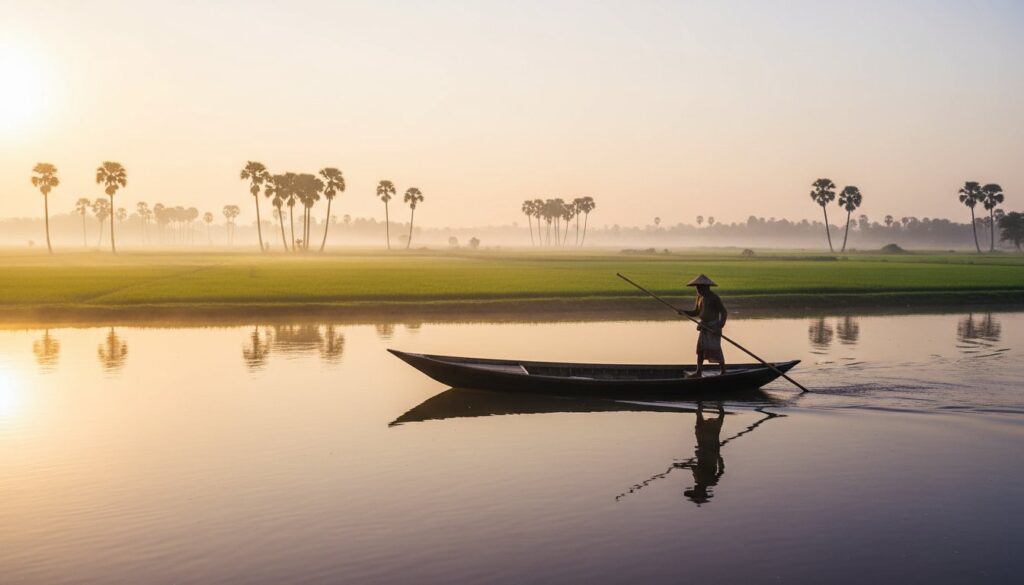
Forget the dry textbook entries and overwhelming timelines that fail to capture the true spirit of a nation. Beyond the statistics lies a land pulsating with color, warmth, and a story that stretches back for millennia. This is the real Bangladesh—a country where poetry flows as freely as its mighty rivers and the aroma of simmering biryani tells a story of its own. This guide is your personal invitation to move beyond the facts and figures and connect with the vibrant, beating heart of this incredible place.
Together, we will journey through its rich history, not as a lecture, but as a grand, unfolding story. You’ll discover the soul-stirring traditions of its festivals, taste the secrets behind its most beloved dishes, and wander through ancient ruins that whisper tales of empires past. Whether you are reconnecting with your heritage or discovering this captivating culture for the first time, prepare to be enchanted. You are about to meet the resilient, hospitable, and endlessly creative people who make this nation truly unforgettable.
At a Glance: Understanding Modern Bangladesh
- Capital City: Dhaka
- Population: Over 170 million
- Official Language: Bengali (Bangla)
- Currency: Bangladeshi Taka (BDT)
Nestled in the heart of South Asia, Bangladesh is a vibrant and resilient nation defined by its lush landscapes, rich cultural tapestry, and the unyielding spirit of its people. As one of the world’s most populous countries, it possesses a dynamism that is palpable from its bustling cities to its serene rural villages. The nation’s story is one of remarkable progress, transforming its economy and making significant strides in human development. For those seeking foundational information, Wikipedia’s Comprehensive Guide to Bangladesh serves as an excellent resource.
Geography: The Land of Rivers
The geography of Bangladesh is dominated by the fertile Bengal delta, the largest on Earth, formed by the confluence of the Ganges (Padma), Brahmaputra (Jamuna), and Meghna rivers. This riverine landscape dictates the rhythm of life, with the annual monsoon season bringing vital water for agriculture while also posing the threat of flooding. This unique environment is home to the Sundarbans, the world’s largest mangrove forest and a UNESCO World Heritage Site. The country experiences six distinct seasons—Grishmo (summer), Borsha (rainy), Shorot (autumn), Hemonto (late autumn), Sheet (winter), and Boshonto (spring).
People and Language: A Tapestry of Voices
The soul of the nation is captured in its language, Bengali (Bangla), an Indo-Aryan language with a profound literary heritage. The passionate defense of this language led to the historic Language Movement in 1952, a pivotal event in the country’s path to independence. The population is ethnically homogenous, with Bengalis comprising over 98% of the populace. Islam is the predominant religion, followed by Hinduism, Buddhism, and Christianity, all coexisting to create a culturally diverse society.
Economy: From Agriculture to Digital Innovation
Once primarily agrarian, Bangladesh’s economy has rapidly diversified. It is now a global leader in the ready-made garment (RMG) industry, which is a cornerstone of its export earnings. Agriculture remains vital, with rice and jute being principal crops. In recent years, a burgeoning digital economy has emerged, with a thriving tech startup scene in cities like Dhaka. Furthermore, remittances sent home by the large Bangladeshi diaspora are a crucial pillar of economic stability and growth.
A Journey Through Time: The Story of Bangladesh
The story of Bangladesh is not merely a collection of historical dates; it is a powerful narrative of resilience, cultural pride, and an unyielding fight for identity. Woven through centuries of prosperity, subjugation, and eventual triumph, the spirit of the Bengali people has shaped a nation that is as vibrant as its lush, green landscapes. Understanding this journey is key to appreciating the heart of the country today.
Ancient Roots and the Sultanate Period
The land, part of the historic Bengal region, has been a cradle of civilization for millennia, home to ancient kingdoms like Vanga and Pundra. A significant turning point came with the arrival of Islam, leading to the establishment of the independent Bengal Sultanate in the 14th century. This era marked a golden age of prosperity, where the region became a thriving global trade hub, famous for its exquisite muslin textiles and spices, attracting merchants from across the world.
British Rule and the Partition of India
The arrival of the British East India Company gradually led to colonial rule, which reshaped the region’s economy and politics. The next seismic shift occurred in 1947 with the partition of British India. The Bengal region was divided, and its eastern, Muslim-majority part became East Pakistan. This new arrangement was deeply flawed; East Pakistan was separated from West Pakistan by over 1,000 miles of Indian territory, creating a state bound by religion but starkly divided by language, culture, and ethnicity.
The 1971 Liberation War and Birth of a Nation
The seeds of independence were sown not by politics alone, but by a passionate defense of culture. The Language Movement of 1952, where students sacrificed their lives for the right to speak their native Bangla, became a powerful symbol of Bengali identity. Decades of economic disparity and political suppression by West Pakistan culminated in the 1971 Liberation War. After a declaration of independence, the nation endured a brutal nine-month struggle. This fight for self-determination, which is detailed in many historical accounts and summarized in this Modern Bangladesh Overview, concluded with victory on December 16, 1971. This war remains the single most defining event in the nation’s history, forging the proud, independent spirit of Bangladesh.
The Heartbeat of a Nation: Exploring Bangladeshi Culture
To understand Bangladesh is to experience its culture—a rich tapestry woven from ancient traditions, deep-rooted family values, and a spirit of resilience. Daily life is a vibrant affair, centered on the unshakable bonds of community and hospitality, where a guest is always welcomed with warmth and a shared meal. This cultural identity is a dynamic blend of the old and the new, seen in its bustling city streets, serene villages, and colorful celebrations.
A Culinary Tour: Flavors of Bangladesh
The Bangladeshi palate is a symphony of spicy, savory, and sweet. Food is the cornerstone of every gathering, from humble family dinners to grand weddings. Key dishes include fragrant biryani, the cooling comfort of panta bhat (fermented rice), and an array of mashed vegetables and fish known as bhortas. The national fish, Ilish (Hilsa), is a delicacy, often steamed in mustard paste. No meal is complete without mishti (sweets) like Roshogolla or seasonal rice cakes called pitha.
Festivals and Celebrations
The calendar is punctuated by festivals that unite people of all backgrounds. Pohela Boishakh, the Bengali New Year, erupts in a riot of color with parades, music, and traditional attire. Major religious holidays like the Muslim Eid-ul-Fitr and the Hindu Durga Puja are celebrated with communal joy and feasting. These nationwide events offer a fantastic lens through which to explore the country’s spirit, and many travel guides detail the best Iconic Places to Visit in Bangladesh during these festive times. Another key cultural event is the month-long Ekushey Book Fair, honoring the Bengali Language Movement.
Arts, Music, and Literature
The nation’s artistic soul is profound and multifaceted. The literary landscape is forever shaped by Nobel laureate Rabindranath Tagore, whose poetry and songs are national treasures. Traditional folk music, such as the mystical melodies of the Bauls and the river songs of Bhatiali, echo through the countryside. This artistic heritage is also tangible in intricate Nakshi Kantha embroidery and timeless pottery, while a burgeoning contemporary art and film scene continues to push creative boundaries.

Discovering the Land: Iconic Places to Visit
Embark on a virtual journey through the vibrant landscapes of Bangladesh, a nation where bustling megacities give way to serene natural wonders and ancient history whispers from every corner. From the chaotic charm of its capital to the tranquil call of the wild, the country offers a tapestry of unforgettable experiences for every traveler.
Dhaka: The Pulse of the Nation
As the political and economic heart of the country, Dhaka is a city of incredible energy. Dive into Old Dhaka, a labyrinth of narrow streets teeming with colorful rickshaws, bustling markets, and the tantalizing aroma of street food like biryani and fuchka. Explore historical landmarks such as the 17th-century Lalbagh Fort and the majestic Ahsan Manzil, the ‘Pink Palace’ on the banks of the Buriganga River.
Natural Wonders: Sundarbans and Cox’s Bazar
Venture south to witness two of the world’s most breathtaking natural marvels. The diverse geography of this nation is on full display here:
- The Sundarbans: A UNESCO World Heritage site, this is the planet’s largest mangrove forest and the royal domain of the elusive Bengal tiger.
- Cox’s Bazar: Stretching for an incredible 120 kilometers, it holds the title of the world’s longest natural sea beach, perfect for sunset views.
- St. Martin’s Island: A short trip from the mainland, this island offers pristine coral reefs and tranquil, turquoise waters.
Historical and Scenic Treasures
Beyond the coast, discover a land rich in history and scenic beauty. The rolling green hills of Sylhet are carpeted with endless tea gardens, offering a peaceful retreat. Travel back in time at the ruins of Somapura Mahavihara in Paharpur, one of the most significant Buddhist monasteries south of the Himalayas. Don’t miss the historic Mosque City of Bagerhat, another UNESCO site famed for its 15th-century architecture.
For a unique perspective, consider a river cruise along the country’s vast waterways, which offers an intimate glimpse into the riverine life that defines so much of this nation. To plan your own journey, you can find more local insights at Priyobd.com.
Connecting with the Global Bangladeshi Community
The story of Bangladesh is not confined to its borders. Millions of people of Bangladeshi origin have built lives around the world, creating a vibrant and influential global diaspora. While they contribute significantly to their new homes, the desire to maintain a connection to their roots remains a powerful force. In today’s digital age, technology serves as a vital bridge, closing the gap between continents and generations and keeping the spirit of community alive.
The Bangladeshi Diaspora: A Worldwide Presence
From the bustling streets of London and New York to the dynamic cities of the Middle East, the Bangladeshi diaspora has established a significant presence. These communities are invaluable, enriching their host countries with unique cultural perspectives while simultaneously supporting development back home. This global network is united by a common thread: a deep-seated need to connect with others who understand their heritage, speak their language, and share their stories.
Why Online Communities Matter
Digital platforms have revolutionized how we maintain these connections. For the global community, they are essential spaces to preserve language, celebrate cultural festivals, and pass traditions to the next generation. They offer an invaluable, simple way to find friends who understand your background and to chat in real-time with people back home. If you have any questions about fostering these connections, our team is always available to help via the contact us page.
Join the Conversation with PriyoBDChat
PriyoBDChat was created to be that digital home for Bangladeshis everywhere. We offer a welcoming and inclusive space designed for easy, authentic conversation. A key feature is our no registration policy—you can jump into a chat instantly and start connecting without any barriers. Whether you want to have a casual chat, make new friends who share your experiences, or simply feel the warmth of a community that feels like home, PriyoBDChat is here for you. We invite you to join our community and share your story today.
Embrace the Spirit of Bangladesh
From its resilient history and ancient landmarks to the vibrant tapestry of its modern culture, this journey has unveiled the heart and soul of a truly remarkable nation. We’ve seen how the spirit of Bangladesh is carried not just within its borders, but by a passionate global community connected by shared heritage and experience. This incredible story is one of strength, art, and profound human connection.
Now, it’s your turn to be a part of that story. Your journey doesn’t have to end here. Connect with fellow Bangladeshis from around the world in a welcoming space that is free, accessible worldwide, and requires no registration. You can start chatting instantly and share your own experiences. Join our free Bangladesh chat room and connect with your community now! Your next conversation and connection to home is just a click away.
Frequently Asked Questions
What is Bangladesh most famous for?
Bangladesh is world-famous for the Sundarbans, the planet’s largest mangrove forest and home to the majestic Royal Bengal tiger. The country is also a global leader in the ready-made garment industry. Culturally, the nation is renowned for its vibrant festivals like Pohela Boishakh (Bengali New Year), its rich literary tradition, and the historic Language Movement, which championed the preservation and recognition of the Bengali language.
Is it safe to travel to Bangladesh?
For most travelers, it is generally safe to travel to Bangladesh, especially in major cities and popular tourist areas. As with any destination, it is wise to take standard precautions: be aware of your surroundings, secure your valuables, and avoid walking alone in isolated areas late at night. Before your trip, always consult your government’s official travel advisories for the most current safety information to ensure a secure journey.
What is the main religion and language in Bangladesh?
The predominant religion is Islam, practiced by the vast majority of the population, with a significant Hindu minority and smaller communities of Buddhists and Christians. The official and most widely spoken language is Bengali (also known as Bangla). It is a language with a rich literary history that holds deep cultural significance. English is commonly understood in business, tourism, and urban centers, which is helpful for international visitors.
What is the best time of year to visit Bangladesh?
The best time to visit Bangladesh is during the dry, cool winter season, which runs from October to March. This period offers pleasant and comfortable weather, ideal for sightseeing, exploring archaeological sites, and taking river cruises. Visiting during these months allows you to avoid the intense heat of the summer (April to May) and the heavy downpours of the monsoon season (June to September), ensuring a much more enjoyable travel experience.
How can I connect with people from Bangladesh online?
You can connect with people from Bangladesh through various online platforms. Social media sites like Facebook host numerous groups dedicated to Bangladeshi culture, travel, and expatriate communities. Language exchange apps such as HelloTalk or Tandem are excellent for finding native Bengali speakers to practice the language with. Additionally, participating in online forums and cultural communities focused on South Asian arts, music, or cuisine can lead to meaningful and authentic connections.
What are some important cultural etiquette tips for visitors?
When visiting, always use your right hand to eat, give, and receive items, as the left hand is considered unclean. Dress modestly, ensuring your shoulders and knees are covered, especially when entering mosques or temples. It is customary to greet elders with respect, and a simple “Assalamualaikum” is a widely appreciated greeting. Public displays of affection are generally frowned upon, so it is best to be discreet.